AI & Automation
Knowledge Base Automation & Product Paula
AI AutomationContent Strategy
Brief
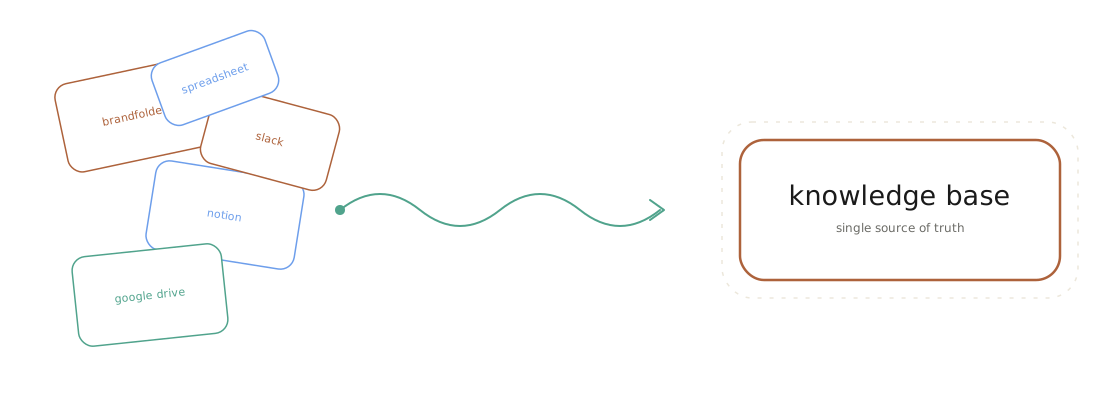
At Resident Home, product information lived in scattered documentation across Brandfolder, Notion, and Google Drive, with multiple sources of truth and no clear hierarchy between them. That made misinformation easy: all of our teams were working from different versions of the same facts, and product marketing kept fielding the same basic questions over and over.
Step 1: Creation
Our first goal was narrow: when migrating to a new AI chatbot, we wanted to give our customer success team one reliable place to work from. I built a paired-page model in Notion with external and internal versions — the former linking to the customer-facing chatbot, the latter containing more sensitive, team-specific information. To accomplish this, I used Claude to automatically pull information from our existing PDF product guides and populate a set of Notion templates. To continue maintaining a single source of truth, all launch information pulls from the Physical Product Catalog (also in Notion). This structure fed both sides of CS at once: the external pages grounded the AI chatbot's answers to customers, and the internal pages gave live agents a searchable reference mid-conversation.
Step 2: Expansion
Once that foundation existed, its value became obvious beyond our original use case. The same clean, verified structure meant any team member could use it as a single source of truth — which we turned into Product Paula. Paula is a Notion agent that answers product questions across all Ashley Digital brands by searching the documentation, cross-checking sources when products or information conflict, and citing back to the source page. If Paula can't find a sourced answer, she logs the question for product marketing rather than guessing.
Result
A single knowledge base now powers CS back-end, our AI chatbot, Voice Velma, and Product Paula. Simplicity, clarity, and efficiency — that's the power of process.